



A Face at the Feast
 James Cathcart
 October 26, 2026



 Add to Favourites


Listen to this daily worship
2 Samuel 9: 1–13 (NIV-UK)
1 David asked, ‘Is there anyone still left of the house of Saul to whom I can show kindness for Jonathan’s sake?’
2 Now there was a servant of Saul’s household named Ziba. They summoned him to appear before David, and the king said to him, ‘Are you Ziba?’
‘At your service,’ he replied.
3 The king asked, ‘Is there no one still alive from the house of Saul to whom I can show God’s kindness?’
Ziba answered the king, ‘There is still a son of Jonathan; he is lame in both feet.’
4 ‘Where is he?’ the king asked.
Ziba answered, ‘He is at the house of Makir son of Ammiel in Lo Debar.’
5 So King David had him brought from Lo Debar, from the house of Makir son of Ammiel.
6 When Mephibosheth son of Jonathan, the son of Saul, came to David, he bowed down to pay him honour.
David said, ‘Mephibosheth!’
‘At your service,’ he replied.
7 ‘Don’t be afraid,’ David said to him, ‘for I will surely show you kindness for the sake of your father Jonathan. I will restore to you all the land that belonged to your grandfather Saul, and you will always eat at my table.’
8 Mephibosheth bowed down and said, ‘What is your servant, that you should notice a dead dog like me?’
9 Then the king summoned Ziba, Saul’s steward, and said to him, ‘I have given your master’s grandson everything that belonged to Saul and his family. 10 You and your sons and your servants are to farm the land for him and bring in the crops, so that your master’s grandson may be provided for. And Mephibosheth, grandson of your master, will always eat at my table.’ (Now Ziba had fifteen sons and twenty servants.)
11 Then Ziba said to the king, ‘Your servant will do whatever my lord the king commands his servant to do.’ So Mephibosheth ate at David’s[a] table like one of the king’s sons.
12 Mephibosheth had a young son named Mika, and all the members of Ziba’s household were servants of Mephibosheth. 13 And Mephibosheth lived in Jerusalem, because he always ate at the king’s table; he was lame in both feet.
The Bible is not a book. It’s a place. It’s a place we learn new patterns of behaviour.
In these verses David seeks out Mephibosheth — the grandson of his bitter enemy Saul — and gives him a permanent place at his table. Beyond lip service, David is going to have to live out this gesture day by day. He doesn’t have a choice. They’ll be passing one another the salt.
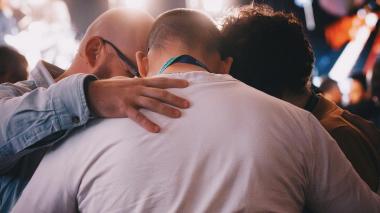
A face at the feast.
To sit with
to eat with
to be with.
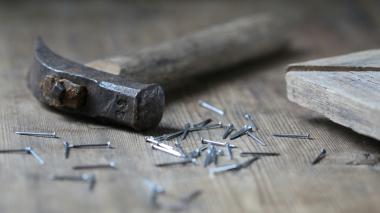
It’s much harder to build a bridge
than burn one.
Much easier to cut ties
than learn knots.
The act of forgiveness itself is, sometimes almost impossibly hard
But living life as a forgiving person, as a person who forgives, is easier in itself to bear
than a life ruled by hate and resentment.
Forgiveness isn’t simply a state of mind, it’s a pattern of behaviour.
Being a forgiver can be painful, but it heals us from the outside in as forgiving acts shape us.
Being bitter and aggrieved is all too easy,
but living with resentment and grudges rots us from the inside out.
Forgiveness is not simply a mental decision
it’s a way of life a pattern of small behaviours
that begins each morning
at the table.
Prayer:
Dear God
As we come again to your table to break our fast
help us to recognise the faces at the feast
that you are calling us to sit with
to eat with
to be with.
Help us to build bridges when we’d rather torch them
and to carefully tie new knots to bind us to one another when we’d rather just cut through all the frayed edges and add them to the bridge fire.
Help us in the big almost impossible acts of forgiveness
but also in the little companionable everyday forgiveness
that creates a pattern of behaviour
that shapes us from the outside in.
Amen.
Connect Bible Study
Read the Connect Bible Study that goes along with this week of Daily Worship.






Login to comment.