



Not This Beach
 James Cathcart
 October 27, 2026


 Add to Favourites


Listen to this daily worship
Psalm 103: 8–14 (NIV-UK)
8
the Lord is compassionate and gracious,
slow to anger, abounding in love.9
He will not always accuse,
nor will he harbour his anger for ever;10
he does not treat us as our sins deserve
or repay us according to our iniquities.11
For as high as the heavens are above the earth,
so great is his love for those who fear him;12
as far as the east is from the west,
so far has he removed our transgressions from us.13
As a father has compassion on his children,
so the Lord has compassion on those who fear him;14
for he knows how we are formed,
he remembers that we are dust.
God does not harbour anger forever
lining up
clinker-built boats of layered resentment
mouldering at anchorage.
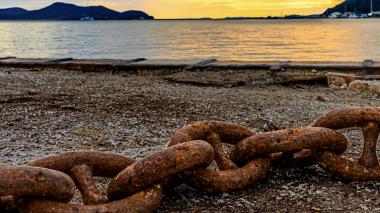
God’s love is not a forgotten shore
a seaside sanctuary fallen into disrepair
where a promising pier falls away into the sea,
where creels and nets lie abandoned.
This littered beach,
these rusting hulls,
this eroding coast
— is not God’s.
Yet we come here,
expecting to find the addled fisherman,
the disgruntled harbourmaster
the screaming navy captain.
Or we swear to never visit here
because the fisherman is deluded and unsettling,
the harbourmaster is cruel and irrelevant,
and the old captain is absurd and unbelievable.
But this harbour
this place in our imagination
this line up of broken down boats
and collapsed industry
where God holds on to bitterness
and rages at the sea and the passing of time like King Canute,
is a place of our own creation,
not God’s.
It’s us who have dug out the sand, and driven the posts into the silt.
God is not a crazed fisherman with a salty beard full of tall tales and bitter digs.
God is not a tetchy harbourmaster, scratching his scraggly beard and watching over a crumbling legacy of rotting boats.
God is not a furious captain bellowing from his bristling gargantuan beard.
We’re always giving God bushy eyebrows and a beard aren’t we?
Prayer:
Dear God,
We come to your beach
your sea
your wild sky
and we see life everywhere
stretching from east to west and beyond the horizon.
We see ships coming and going.
We see storm and sunshine
tides going out and returning.
We see love in watercolour reaching from grains of shell and sand to a curtain of impossible multicoloured clouds.
We stand here,
afraid and hopeful
easy and doubtful
familiar and new
and we see that anger never has the last word
here in this uncanny place
that takes the passage of time
in rock, in water, in air,
and makes something remarkable
and beautiful
Amen.
Connect Bible Study
Read the Connect Bible Study that goes along with this week of Daily Worship.







Login to comment.